Indo-US Trade and Tariff Negotiations: Some Important Issues
by
Dr H A C Prasad
(Former Senior Economic Adviser, Ministry of Finance, GOI)
Tariff conflict with India under Trump 1.0
The 2018/2019 trade conflict between the US and India was triggered by two policies of the US. The first was the imposition of the global tariff on the US steel imports of 25% and additional tariffs on the US Aluminium imports of 10 % under section 232 of US Trade Expansion Act 1962.This was not exclusively against India and was directed on all countries. The second phase of Tariff Conflict between the US and India was more direct on India when GSP benefits were withdrawn from India on June 5th 2019 automatically resulting in MFN tariffs for these items formerly under GSP in imports from India, it also triggered a 25% duty on solar cells which India was exempted from as long as it was a GSP beneficiary.
After multiple pauses, India imposed retaliatory tariffs on 28 items imported from the US, from June 2019.The main items in this list were Agricultural items like Almonds, Apple fresh, Iron and Steel and Chemicals. The US even took India out of Developing Countries’ list citing India’s share in World Trade above 0,5% and on account of India being a G-20 member. As a result, India was no longer eligible for special preferences under the methodology for CVD investigations. Our earlier study shows that both the US and India were affected by these tariff measures as reflected by the fall in exports of both India and the US to each other of the tariff hiked items.
India’s Trade and Tariff Negotiations with the US under Trump 2.0
Under Trump 2, despite tariff threats by the US, efforts were made and efforts are also underway to arrive at a Trade Deal.
Steps taken
Some steps taken in India’s Budget 2025-26 which could facilitate India’s tariff negotiations with the US are the following.
Some Important Issues for India in the Current Trade Negotiations with the US
Agriculture and GMO (Genetically Modified Organisms) Crops. Agriculture and GMO are definitely the most important thorny issues in the negotiations. Some important issues in this context are the following.
Therefore, great caution is needed in importing GMO food crops and food items. GMO should basically be Indian made with strict checks and controls. Suggestions like self-certification by US exporters of such items may not hold water.
Non-Agriculture Sector
While we have to be careful in opening our Agriculture sector for imports, in other sectors a more open policy is needed. Some issues in this context are the following.
There is first a need to fight the Perception War, while negotiating tariffs.
If this be the case, then there is a need for India to dispel the belief that India is a high tariff country by highlighting these facts.
Need to reduce non-agricultural tariffs.
While there is a need to bridge the gap between perception and reality, tariffs in non-agricultural sector could be reduced near the Effective tariff levels. However, concerns of some important sectors like Automotive, Engineering and Electronics sectors should be taken care of. Greater market access by India for US in Whiskey, Ethanol and automobiles are tricky issues.
India should also try to get the maximum concessions in items which are now out of GSP including Textiles and leather sector, besides greater market access for our Pharmaceutical sector.
India should also negotiate for lower tariffs on its exports to the US.
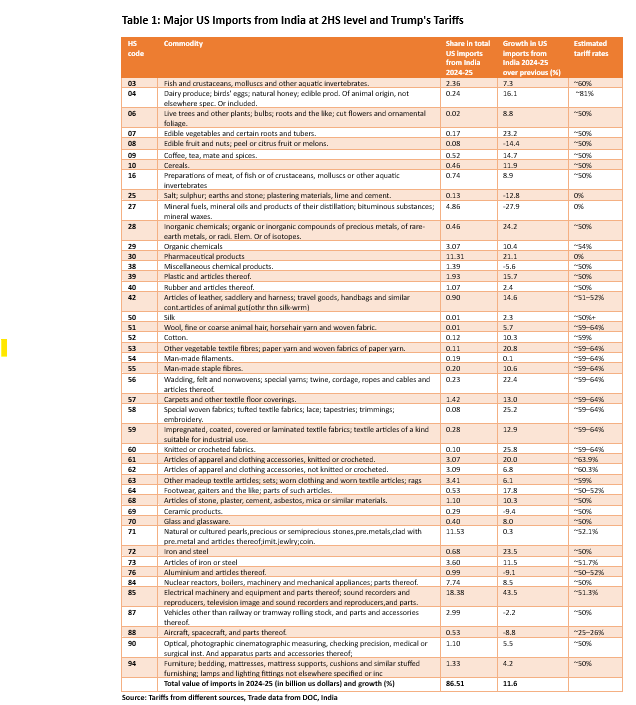
While 26% reciprocal tariff has been proposed on India by the US including the 10% baseline tariffs, India should negotiate for a better deal with the assurance that tariffs like the BRICS tariffs, Russia related tariffs are not levied on India. The tariffs on Steel and Aluminium increased to 50% in 2025 by the US also needs to be resolved, though India has also notified to the WTO that it will impose retaliatory tariffs on the US.